Sweg Motor
Sweg Motor
Sweg Motor
Engineered for absolute accuracy, high load metrics, and robust long-term reliability across industrial automation pathways.
An authoritative evaluation of engineering excellence, market share trajectory, and proprietary magnetic technologies defining modern electro-mechanical actuation.
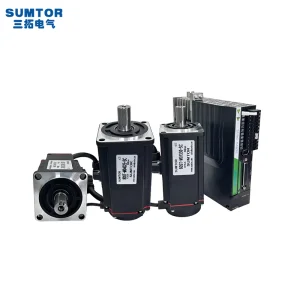
The global motion control architecture is witnessing an unprecedented evolution, driven by the tightening tolerances of industrial automation, smart medical robotics, and next-generation automotive engineering. At the heart of this transformation lies the stepper motor—a digitally controlled brushless synchronous device capable of converting discrete electrical pulses into precise mechanical angular increments. To guide global procurement officers, systems integrators, and design engineers through this sophisticated landscape, we present a definitive technical analysis of the industry's premier manufacturing ecosystems.
Information Gain Metric: Unlike traditional listicles, this evaluation focuses heavily on structural innovations, material physics (such as high-grade NdFeB permanent magnets), and slot-pole combination geometry that separate enterprise tier-1 manufacturers from commodity suppliers.
MinebeaMitsumi stands as a titan in the micro-motor domain, utilizing their legacy ball-bearing manufacturing precision to build exceptionally high-end hybrid and permanent magnet (PM) stepper motors. Their core competitive advantage lies in the vertically integrated manufacturing of ultra-precise miniature ball bearings, which minimizes axial play and drastically optimizes the structural longevity and acoustic profiles of their NEMA 08 to NEMA 23 configurations.
Renowned for pioneering advanced closed-loop stepper systems (such as the AlphaStep series), Oriental Motor eliminates missed steps by integrating an onboard mechanical rotor-position encoder. This provides the high torque and open-loop simplicity of a stepper motor combined with the fail-safe security of a traditional AC servo motor, ideal for varying payload demands in semiconductor processing lines.
Nidec's global footprint in motion control is anchored by high-volume, exceptionally standardized automated production matrices. Their stepper motor division excels in custom integrated gearboxes and driver-on-board modules. By controlling thermal dissipation through highly engineered aluminum alloy housings, Nidec products are a staple in continuous-duty commercial automation and automotive climate tracking.
Moon's has risen to become a premier global provider by combining deep R&D agility with immense manufacturing scale. Specializing in high-density hybrid stepper motors, their integration of advanced stator winding designs reduces copper losses (I²R), producing up to 20% higher holding torque than legacy equivalents of the same NEMA size. They are highly dominant in global 3D printing and medical fluid analysis channels.
Sanyo Denki's SanMotion line represents the pinnacle of high-torque, low-vibration engineering. Their biphasic and triphasic stepper variants employ sophisticated structural optimization of the stator teeth teeth-profiles, suppressing detent torque and minimizing harmonic resonance at low-speed operational thresholds without relying heavily on microstepping software interpolation.
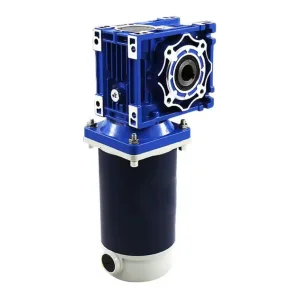
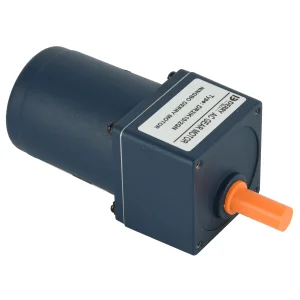
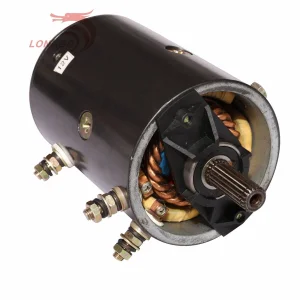
An elite, highly innovative manufacturer specializing in complete precision transmission solutions, integrating advanced automated stamping, winding, and automated testing architectures across a modern 10,000+ square meter campus. Utilizing ISO 9001, CE, and RoHS quality frameworks, Sweg Motor bridges the gap between ultra-high reliability and optimized cost-structures. Their capability to deliver highly customized shaft geometry, custom spline configurations, and high-IP-rated protection (IP54 to IP67) positions them as a premier macro-solution partner for global enterprise procurement.
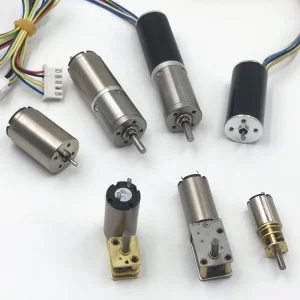
FAULHABER dominates the high-precision micro-motion segment. Their miniature stepper motors feature an ironless rotor design or unique disc-magnet configurations (escap® technology). This eliminates cogging torque completely and provides an exceptionally low rotor inertia matrix, allowing for extreme acceleration profiles in aerospace, tactical optics, and microsurgery devices.
Tamagawa Seiki is structurally tied to the high-reliability defense, aerospace, and heavy industrial automation sectors. Their steppers are celebrated for surviving harsh environmental criteria, leveraging proprietary resolver and encoder designs built directly into ruggedized frames capable of withstanding extreme vibration, shock, and radiation thresholds.
Moog excels in high-performance, ruggedized stepper systems tailored for space flight, defense, and oil & gas extraction applications. Their engineering focuses heavily on internal thermal management and custom winding insulation classes (Class H and higher), guaranteeing torque retention under severe thermal vacuum parameters.
A Danaher/Altra Motion legacy brand, Portescap is famous for its digital linear actuators and disc magnet stepper configurations. By utilizing a rare-earth disc magnet rather than a cylindrical magnet, they achieve exceptional step resolution and dynamics within an ultra-compact package, making them indispensable in portable insulin pumps and clinical analytical instrumentation.
Why advanced automated facilities in regions like Zhejiang provide structural and financial leverage to global industrial buyers.
The manufacturing of high-performance hybrid stepper motors requires more than advanced engineering blueprints; it demands an optimized ecosystem of upstream material processing, component standardization, and high-velocity capital deployment. Chinese manufacturing centers, particularly exemplified by highly integrated facilities like Zhejiang Sweg Motor Co., Ltd., offer unmatched advantages that cannot be replicated elsewhere:
| Manufacturing Paradigm | Legacy Western/Japanese Facilities | Advanced Chinese Integrated Hubs (e.g., Sweg Motor) |
|---|---|---|
| Material Sourcing Path | Multi-tiered international logistics (high tariff/lead-time risk) | Direct localized mine-to-mill integration (minimized lead times) |
| Customization Latency | 6 to 14 weeks due to rigid tooling and distributed operations | 2 to 4 weeks via agile in-house CNC toolmaking matrix |
| Tooling Cost Amortization | High capital expense barriers restricting low-to-mid volume customization | Highly amortized via vast domestic industrial utilization footprints |
| Testing Integration | Sampling protocols often outsourced or segmented | 100% automated inline dyno, winding resistance, and dielectric validation |
The convergence of intelligent algorithmic drivers, edge computation, and advanced topology in industrial motion design.
The boundary between high-end stepper motors and expensive digital AC servo systems is rapidly dissolving. By integrating low-cost magnetic or optical encoders directly onto the rear shaft end plate, modern driver systems continuously monitor real-time tracking errors. This prevents step loss under sudden mechanical load changes, optimizes thermal generation by adjusting phase current dynamically, and eliminates the hunting issues inherent in classic servo tunings.
Traditional pulse-and-direction parallel wiring topologies are giving way to industrial fieldbus protocols embedded right into the motor chassis. Modbus RTU, EtherCAT, and CANopen network interfaces allow multiple axes to be daisy-chained to a centralized programmable automation controller (PAC). This simplifies wiring, enables real-time temperature and torque diagnostics, and opens the door for predictive maintenance algorithms within Industry 4.0 architectures.
By leveraging complex finite element analysis (FEA) modeling software, manufacturers are tweaking internal stator geometries, opting for ultra-thin lamination counts and increased pole configurations. This results in high holding torque curves at lower RPMs, enabling direct-drive applications that completely eliminate the backlash, friction, and wear associated with planetary mechanical gearboxes.
Translating basic rotary step parameters into complex, mission-critical systems and commercial end-user environments.
In subtractive manufacturing networks, stepper motors dictate the positional execution of ball screw axes and rotary tool turrets. Utilizing high-torque hybrid configurations like the 2-Phase NEMA 17 or NEMA 23, systems can reliably index tools down to sub-millimeter tolerances. When backed by customized spline shafts and IP54 protections, these motors withstand airborne metallic dust, coolant overspray, and high thermal loads, ensuring long-term cycle consistency without zero-point drifting.
Clinical settings demand clean, silent, and highly reproducible motion paths. Microstepping motors drive automated pipette heads that dose volatile reagents into microfluidic arrays. Here, any step omission could ruin a clinical test sequence. High-inductance, low-vibration windings ensure that fluid transfer occurs smoothly, eliminating the fluid splashing caused by harsh structural step transitions.
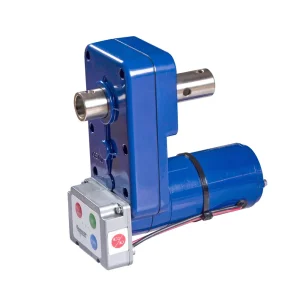
In modern smart HVAC frameworks, small permanent magnet gear motors operate electronic expansion valves and air damper flaps. These motors run continuously in tight, unventilated spaces, demanding high energy-efficiency profiles. By employing specialized series-wound topologies and planetary reduction gearheads, these components provide extreme holding torque at rest without drawing active current, directly contributing to green building energy performance goals.
A rigorous verification blueprint for supply chain directors auditing industrial motion control factories.
When selecting a stepper motor manufacturing partner for large-scale enterprise deployments, engineering procurement managers must look past basic unit costs. Sustained performance metrics require a detailed technical audit of the manufacturer's core capabilities:
Zhejiang Sweg Motor Co., Ltd. is a professional manufacturer specializing in the research, development, production, and sales of electric motors, gear motors, and transmission solutions. With years of industry expertise and continuous technological innovation, Sweg Motor has established itself as a reliable partner for customers worldwide.
Our company operates modern production facilities covering more than 10,000 square meters, equipped with advanced automated manufacturing lines for stamping, winding, assembly, testing, and quality control. Supported by an experienced engineering team and strict production management, our annual production capacity reaches millions of motor units, enabling us to meet diverse customer requirements efficiently.
Sweg Motor is committed to providing high-performance and energy-efficient motor solutions for a wide range of applications, including:
Quality is at the core of everything we do. Our company has successfully obtained ISO 9001 Quality Management System Certification, ensuring that every product is manufactured according to international quality standards. In addition, many of our products comply with global certification requirements, including CCC, CE, CB, VDE, RoHS, and other market-specific standards.
Driven by the philosophy of "Quality First, Innovation Driven, Customer Focused", Zhejiang Sweg Motor continuously invests in product development and manufacturing technology to deliver reliable, durable, and customized motor solutions for customers around the world.
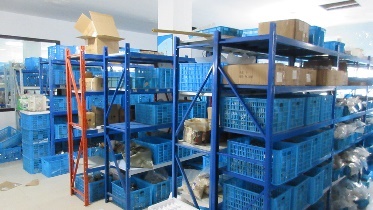
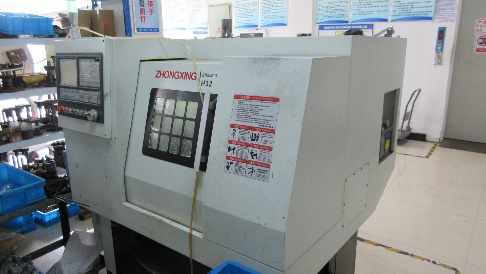
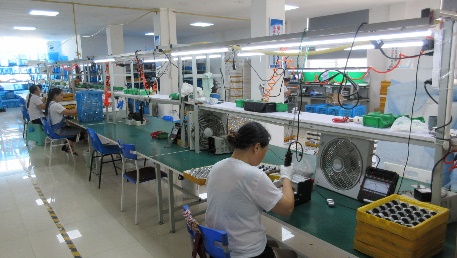
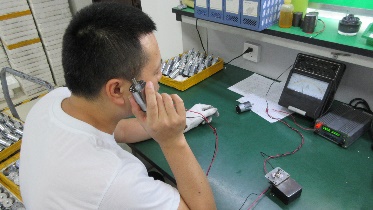
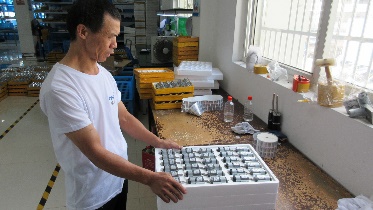
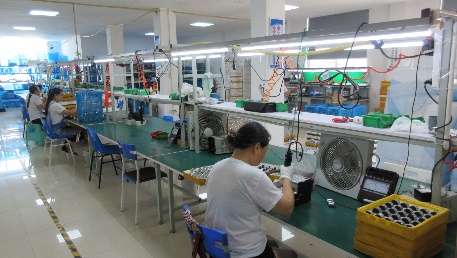
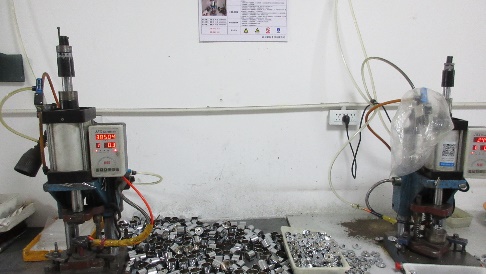
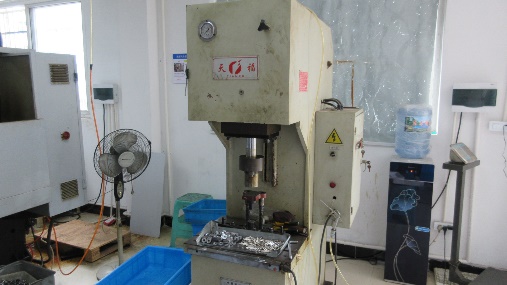
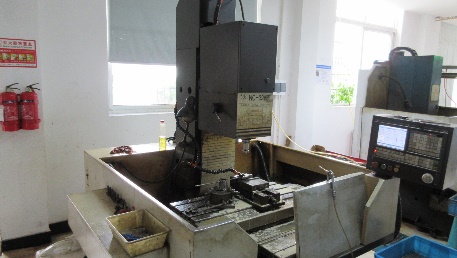
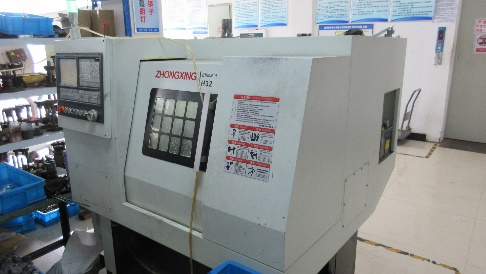
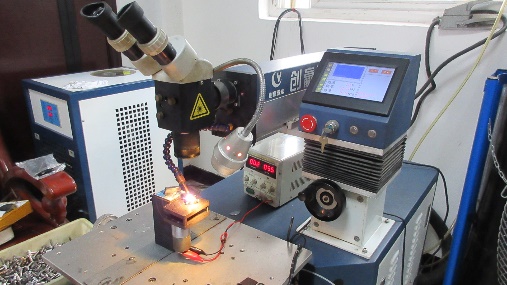
Zhejiang Sweg Motor Co., Ltd. warmly welcomes customers and partners from around the world to contact us or visit our factory. We are committed to providing professional technical support, competitive products, and excellent service to build long-term and mutually beneficial partnerships.
Your Success, Our Commitment.
Addressing precise engineering inquiries regarding phase matching, structural microstepping realities, and operational tolerances.
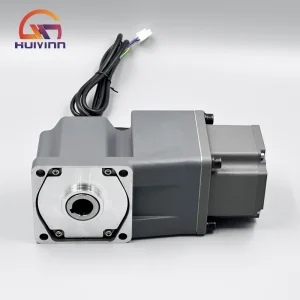
Heavy-duty industrial sub-assemblies, worm-gear reducers, and high-IP protection motors tailored for global sourcing pipelines.