Sweg Motor Sweg Motor

Top 10 Functions of an Encoder in BLDC Motors Explained

Time:2026-07-07 Author:Aria
0%

Understanding the role of an encoder in BLDC motors is crucial for many engineering applications. According to Dr. Emily Johnson, a renowned expert in motor control systems, "Encoders provide essential feedback for efficient operation." This feedback is key to monitoring the motor's position and speed.

BLDC motors utilize encoders to ensure precision in movement. The encoder translates mechanical motion into electrical signals. These signals allow the motor controller to make real-time adjustments for optimal performance. Without proper feedback, performance can be inconsistent.

Many engineers overlook the encoder's importance in system design. This can lead to inefficiencies and increased wear on components. Recognizing what is the role of an encoder in a BLDC motor is vital for achieving reliability in applications ranging from robotics to electric vehicles.
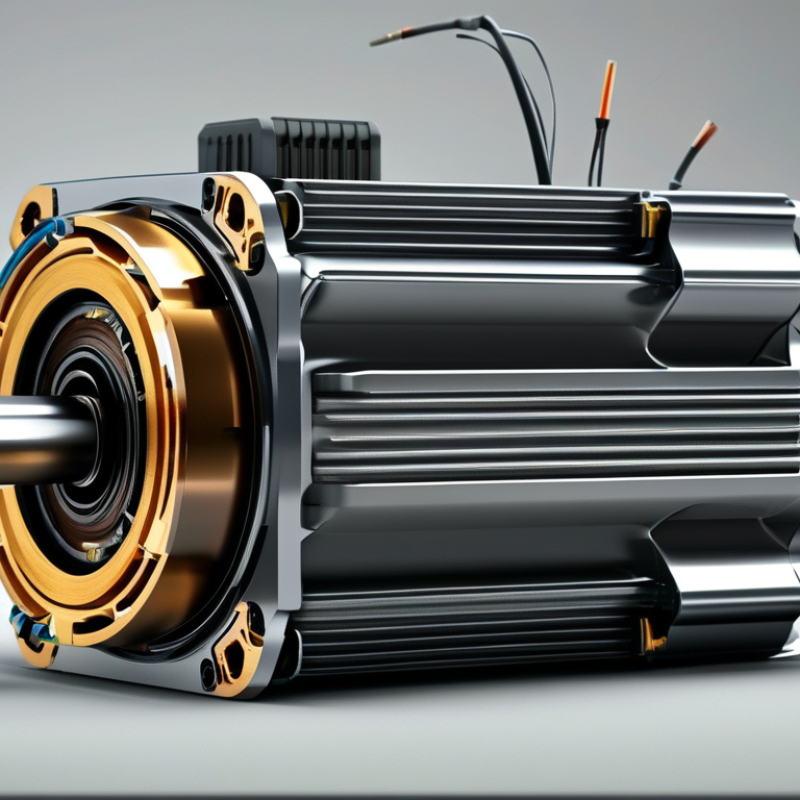
Top 10 Functions of an Encoder in BLDC Motors Explained

Understanding the Basics of BLDC Motors and Encoders

Brushless DC (BLDC) motors offer impressive efficiency and performance. Understanding the role of encoders is vital for optimizing their functionality. An encoder provides feedback, which allows for precise control of the motor's position and speed. This feedback loop is essential in various applications, from robotics to electric vehicles.

Encoders come in two main types: incremental and absolute. Incremental encoders measure changes in position, while absolute encoders provide a unique position for every point in a rotation. This distinction is crucial when high accuracy is required. Effective integration of encoders with BLDC motors can lead to smoother operation and better energy management.

While encoders significantly enhance BLDC systems, challenges remain. Noise and interference can affect the accuracy of the feedback signal. Moreover, installation errors can lead to misalignment, compromising performance. Addressing these issues requires expertise and careful planning. Insights from previous implementations can guide improvements, but continuous refinement is essential for optimal results.

The Role of Encoders in Controlling Motor Position and Speed

Encoders play a crucial role in controlling the position and speed of Brushless DC (BLDC) motors. They provide vital feedback to the motor controller, enabling precise adjustments. This feedback loop allows for better accuracy in applications such as robotics, automotive, and industrial machinery. According to a recent report by the International Electromechanical Commission, the demand for precise motor control has increased by 20% over the last five years due to advancements in automation technologies.

High-resolution encoders improve position tracking. With higher counts per revolution, they offer detailed information about the motor's movement. This enhanced tracking capability helps reduce overshooting and enhances the system's overall efficiency. In critical applications, like robotics, even small errors in positional data can lead to significant performance issues. A 2023 study highlighted that encoders with resolutions exceeding 1000 pulses per revolution significantly outperform lower-resolution counterparts in speed and position control.

**Tip**: When selecting an encoder, consider the application requirements. Determine if high resolution or speed is necessary.

Additionally, the integration of encoders in closed-loop systems allows for real-time monitoring of performance. This feedback mechanism helps in identifying potential errors early, granting engineers the ability to make necessary adjustments. It’s essential to ensure that encoders are properly calibrated. Poor calibration could lead to unpredicted behavior of the motor.

**Tip**: Regularly check and maintain encoders to ensure optimal performance and longevity.

Top 10 Functions of an Encoder in BLDC Motors

This bar chart illustrates the top 10 functions of encoders used in Brushless DC (BLDC) motors, highlighting their importance in motor control systems. The functions include speed control, position feedback, and fault detection among others, showcasing how each function contributes to the overall performance and reliability of the motor.

Types of Encoders Used in BLDC Motors: A Comparative Overview

Encoders play a vital role in the functioning of Brushless DC (BLDC) motors. Different types of encoders are used in various applications, influencing performance and efficiency. Two primary encoder types are incremental and absolute encoders. Incremental encoders provide relative position changes, ideal for applications needing high-speed performance. However, they require a reference point upon startup, which can be limiting.

Absolute encoders, on the other hand, track a position within a defined range, offering continuous feedback. A study by the International Society of Automation indicated that absolute encoders gain popularity in high precision tasks, particularly in robotics and aerospace applications. This growth is linked to their ability to eliminate the need for homing cycles, thereby enhancing efficiency.

While these encoders provide numerous advantages, there are challenges. Incremental encoders may suffer from noise, impacting accuracy over time. Absolute encoders, although more reliable, can be costly, making them less accessible for smaller implementations.

Thus, balance is crucial in choosing an encoder for specific applications. Assessing the trade-offs can lead to improved performance in BLDC motors, but it also requires careful consideration of the use case.

How Encoders Enhance Feedback Mechanisms in BLDC Systems

Encoders play a crucial role in enhancing feedback mechanisms in Brushless DC (BLDC) motor systems. They ensure precise control of motor position and speed. By providing real-time data, encoders enable accurate feedback for improving performance. This immediate information helps the system adjust accordingly, leading to better efficiency.

Without encoders, motor systems might struggle with accuracy. Inconsistent speed and position could lead to malfunctions. Encoders solve this issue with continuous monitoring. The data they gather allows for quick adjustments, minimizing errors. When feedback is flawed or absent, performance can suffer.

Incorporating encoders into BLDC motors reflects a standard practice. However, even experienced engineers can overlook calibration. Proper installation and settings are essential for optimal performance. Regular maintenance checks can reveal hidden issues, ensuring reliability over time. Each encoder function contributes significantly to the overall effectiveness of BLDC systems.

Top 10 Functions of an Encoder in BLDC Motors

Function Description Benefit
Position Feedback Provides real-time position data of the rotor. Improved control of motor position and accuracy.
Speed Control Measures the rotational speed of the motor. Allows for precise speed regulation.
Direction Detection Identifies the rotational direction of the motor. Enhances control in multi-directional applications.
Error Detection Monitors discrepancies between commanded and actual position. Facilitates troubleshooting and maintenance.
Tuning and Calibration Assists in the tuning of motor parameters. Ensures optimal performance.
Data Communication Transmits feedback data to the controller. Enhances data acquisition for better decision-making.
Integration with Control Systems Integrates seamlessly with various control algorithms. Improves the overall system efficiency.
Feedback Loop Stability Enhances stability in feedback control loops. Minimized overshoot and oscillation.
Enhanced System Safety Monitors operations to detect potential failures. Increases operational safety.
Cost Efficiency Reduces overall system costs by decreasing failures. Optimizes maintenance and operational costs.

Applications of Encoders in Different Industries Using BLDC Motors

Encoders play a crucial role in the functioning of Brushless DC (BLDC) motors across various industries. In automation and robotics, they provide essential feedback for precise motion control. This feedback allows for smoother operations and improved efficiency. According to a report by MarketsandMarkets, the global market for industrial automation and control systems is projected to reach $355 billion by 2026, highlighting the increasing reliance on accurate positioning systems.

In the automotive sector, encoders contribute to electric vehicle technologies. They ensure that the motors perform optimally by monitoring speed and position. This is particularly important for autonomous vehicles, where safety and reliability are paramount. A study from the International Energy Agency indicates that electric vehicle sales are expected to surpass 30% of total vehicle sales by 2030, emphasizing the demand for robust encoder technologies.

Healthcare applications also benefit from encoders. In medical devices, precise movement is critical for functions like surgical robots and imaging systems. The rise in minimally invasive surgeries drives the need for advanced motion control solutions, including encoders. A report from Grand View Research shows that the global medical robotics market is expected to reach $12.6 billion by 2026, showcasing the significance of precise position sensing in this field. However, the challenge remains in ensuring these systems are consistently accurate and reliable over time.

FAQS

: What is the main role of encoders in BLDC motors?

: Encoders provide feedback for controlling position and speed, enhancing accuracy in various applications.

How do high-resolution encoders improve performance?

They offer detailed movement information, reducing overshooting and boosting overall system efficiency.

What happens if encoders are poorly calibrated?

Poor calibration may lead to unpredictable motor behavior and inaccuracies in performance.

What are the two primary types of encoders used?

Incremental and absolute encoders are the main types, each serving different application needs.

What is a limitation of incremental encoders?

They need a reference point at startup, which can limit their usability in some scenarios.

Why are absolute encoders gaining popularity?

Their continuous feedback eliminates homing cycles, which improves efficiency in precision tasks.

What challenges do incremental encoders face?

They can suffer from noise, affecting accuracy and reliability over time.

How can regular maintenance impact encoders?

Regular checks can ensure optimal performance and extend the longevity of encoders.

What should be considered when selecting an encoder?

Assess application requirements carefully to balance resolution and speed needs effectively.

Why is balance important in choosing encoders?

It helps achieve better motor performance but requires careful consideration of trade-offs.

Conclusion

In the realm of BLDC motors, understanding what is the role of an encoder in a BLDC motor is essential for optimizing performance and precision. Encoders serve as crucial devices that provide real-time feedback on motor position and speed, which is vital for achieving accurate control in various applications. By converting the motor's mechanical motion into electrical signals, encoders enable enhanced feedback mechanisms, allowing for smoother operation and better responsiveness.

Different types of encoders, such as incremental and absolute encoders, offer unique advantages depending on the specific requirements of the application. Their versatility makes them prominent in industries ranging from robotics to automation, where precise control is paramount. Ultimately, the integration of encoders in BLDC systems significantly improves operational efficiency and reliability, illustrating their indispensable role within this technology.

Aria

Aria

Aria is a dedicated marketing professional with a deep passion for innovative strategies and a keen understanding of our company's product offerings. With a wealth of experience in the industry, Aria excels at crafting engaging content that highlights the unique features and benefits of our......