Sweg Motor
When exploring the world of Brushless DC (BLDC) motors, one common question arises: what is the difference between sensored and sensorless BLDC motors? Understanding these differences is crucial for engineers and designers working in automation and robotics. Sensored motors use feedback systems to monitor rotor position, allowing for precise control and higher performance in demanding applications. On the other hand, sensorless motors operate without these feedback systems, relying instead on back EMF for commutation. This can simplify the design and reduce costs.
The choice between these two types of motors can significantly impact efficiency and functionality. Sensored motors excel in low-speed applications, where torque control is vital. However, they can be more complex to implement. Sensorless motors are often favored for their simplicity and compactness but may struggle in low-speed scenarios. Engineers should carefully consider their application needs and constraints, as each type has distinct advantages and drawbacks. Ultimately, understanding what is the difference between sensored and sensorless BLDC motors can lead to better decision-making in design and application.
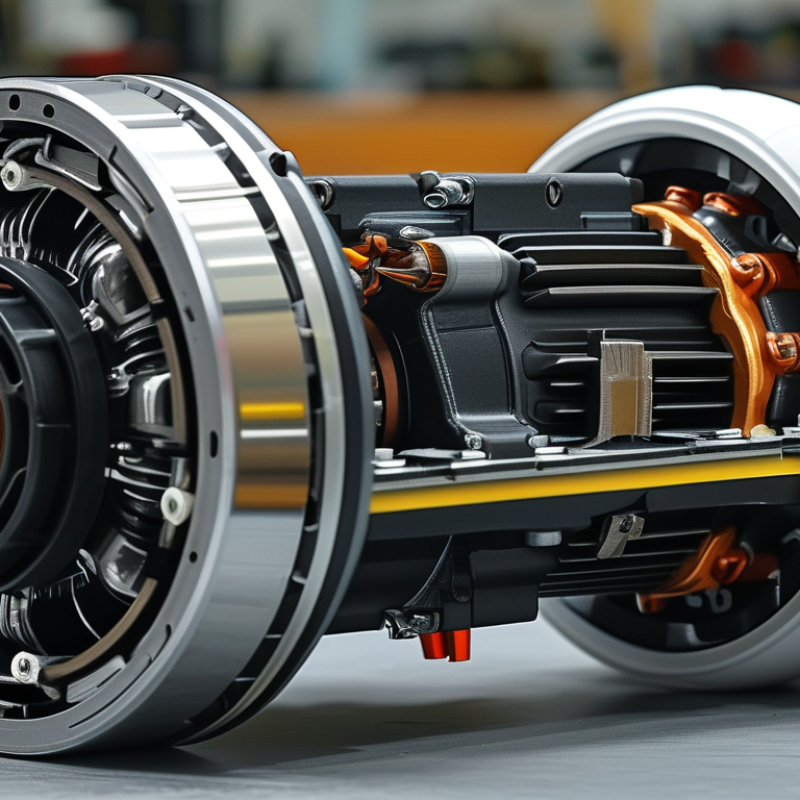
Sensored and sensorless BLDC motors serve different applications, each with distinct advantages. Sensored motors include Hall effect sensors to detect rotor position. This provides accurate commutation in various speeds. They excel in environments with intermittent loads and require precise control. Their design can increase system efficiency, especially in robotics.
On the other hand, sensorless BLDC motors depend on back electromotive force (back EMF) for rotor position. They simplify the design by omitting sensors. This can reduce costs and improve reliability. However, they may struggle in low-speed operations where back EMF is weak. Sensorless designs are often lighter, making them ideal for portable applications.
Choosing between these motors involves weighing precision against simplicity. Each type comes with trade-offs. Sensored motors may be bulkier and more expensive. Sensorless motors could lack the necessary feedback in certain situations. Understanding these differences helps in selecting the right motor for specific needs.
Sensored BLDC motors leverage a feedback system for precise control. These motors use sensors, typically Hall effect sensors, to detect rotor position. This information is vital for optimal torque production and efficiency. The integration of these sensors allows for smooth operation and high performance, especially at low speeds. According to industry reports, sensored motors can achieve efficiency ratings above 90%, making them a preferred choice for many applications.
Key components of sensored BLDC motors include the stator, rotor, and the feedback sensors. The stator contains windings that create a magnetic field. The rotor, which houses permanent magnets, spins within this field. The sensors provide real-time position data, allowing the controller to adjust current flow dynamically. This results in reduced cogging torque and improved responsiveness. However, there can be challenges with sensor placement. Misalignment can lead to performance issues.
The control algorithms used in sensored motors require significant development. They must accommodate changes in load conditions and temperature. Research shows that properly implemented control can reduce energy losses significantly. Despite these advantages, the reliance on sensors can sometimes introduce points of failure. This complexity may not be ideal for all applications. Balancing precision with reliability is a continuous challenge in the field.
Sensorless BLDC motors rely on the back electromotive force (BEMF) for rotor position detection. This approach eliminates the need for physical sensors, such as Hall effect sensors. The absence of sensors can lead to a more compact design and reduced manufacturing costs. However, it also presents challenges, particularly at low speeds where BEMF is minimal.
Key components of sensorless systems include the motor windings and the electronic control unit (ECU). The ECU interprets the voltage signal from the windings to estimate rotor position. This method allows for smoother control and broader operating ranges. But in practice, the efficiency of this system can vary widely. Poor tuning or environmental factors can lead to performance issues or even instability.
Sensorless motors are praised for their simplicity and durability. However, they may not always deliver the same precision as their sensored counterparts. In dynamic applications, the inability to quickly respond to rapid speed changes can be problematic. Understanding these trade-offs is crucial for engineers when selecting the right motor type for specific applications.

When comparing sensored and sensorless BLDC motors, performance characteristics play a critical role. Sensored BLDC motors utilize feedback mechanisms to enhance precision in performance. They often exhibit smoother operation and higher torque, particularly at low speeds. According to recent studies, these motors can provide up to 20% more torque in specific applications due to their real-time feedback capabilities. This feedback translates to improved efficiency, especially in demanding tasks where precise control is essential.
In contrast, sensorless BLDC motors simplify their design by eliminating feedback sensors. This reduction can lead to lower costs and simplify installation. However, they may struggle with torque production at lower speeds. Research indicates that sensorless motors can lose up to 30% of their performance in low-speed scenarios compared to their sensored counterparts. Yet, their reliability in harsher environments is noteworthy. Sensorless designs can withstand conditions where dust and moisture might impede sensored systems.
Both motor types have unique strengths and weaknesses. Sensored motors offer enhanced control and efficiency, while sensorless designs present a more rugged and cost-effective solution. The choice largely depends on application demands. Understanding these nuances can lead to better decisions that align with specific operational goals.
In modern applications, both sensored and sensorless Brushless DC (BLDC) motors play crucial roles. Sensored BLDC motors use feedback mechanisms to accurately control rotor position. This feature makes them great for precision tasks. Common use cases include robotics and CNC machinery, where accuracy is vital. The integrated sensors ensure smooth operation, even at low speeds.
Sensorless BLDC motors rely on back EMF to estimate rotor position. They are simpler and often more cost-effective. These motors excel in applications where cost and size are critical. They find their place in fans, pumps, and household appliances. Despite their advantages, sensorless motors can struggle at startup or in low-speed conditions.
A practical tip for engineers: consider the environment. Use sensored motors in dusty or highly variable conditions. Sensorless motors can be ideal for cleaner settings. Each type has trade-offs; understanding them is key. Small changes in application requirements can influence your choice significantly. Be prepared to reassess your initial decisions as project needs evolve.
This chart compares the efficiency, control complexity, cost, and application suitability of Sensored vs. Sensorless BLDC Motors.
: Sensors detect rotor position, allowing precise control over torque and efficiency.
The sensors provide real-time data, which ensures smooth and responsive operation.
The key components are the stator, rotor, and feedback sensors.
Misalignment can lead to performance issues, affecting motor efficiency.
Sensors may introduce points of failure, complicating motor design and reliability.
They use back EMF to estimate rotor position without feedback systems.
They are often used in robotics and CNC machinery, where precision is crucial.
Sensored motors perform well in dusty or highly variable conditions.
They are simpler and more cost-effective, ideal for budget-sensitive projects.
Evaluate application requirements, as small changes can impact your initial decision.
When exploring what is the difference between sensored and sensorless BLDC motors, it's essential to understand their definitions and functionalities. Sensored BLDC motors utilize physical sensors to detect rotor position, ensuring precise control, especially during startup and low-speed operations. In contrast, sensorless BLDC motors rely on back EMF signals to infer rotor position, which can lead to simpler designs and lower costs but may be less efficient at low speeds.
Both motor types have distinct performance characteristics. Sensored motors generally offer smooth torque delivery and better performance during dynamic conditions, while sensorless motors tend to be more robust with fewer components. Applications for sensored BLDC motors include robotics and industrial automation, where precision is crucial, whereas sensorless motors are commonly found in applications like fans and pumps, where cost-effectiveness is a priority. Understanding these differences can help in selecting the right motor type for specific applications.